Ask a group of pet owners how they clean their pets’ teeth and you will hear several answers: a nightly brush, a dental treat, wipes, or something added to the water. The useful question is what each method actually does—and which routine your pet can comfortably accept.
Regular brushing is the starting point for home plaque control when your pet tolerates it. Other methods may support the routine, but their benefits depend on the specific product. Pain, inflamed gums, and heavy hardened buildup call for veterinary advice.
Compare the methods before you buy
These categories are not interchangeable. Choose for your pet’s species, size, health, and willingness to accept handling.
| Method | Where it fits | What to check |
|---|---|---|
| Soft brush + pet toothpaste | Regular contact cleaning of accessible tooth surfaces | Suitable brush size, species-appropriate paste, comfortable handling |
| Dental finger wipes | Wiping accessible surfaces during a brief routine | Ingredients, product-specific claims, and bite risk |
| Dental treats or diets | A product-dependent option to discuss with your vet | Species, size, calories, allergies, and evidence for the exact product |
| Water additives or gels | An additional product-dependent maintenance option | Label directions and whether your pet still drinks normally |
| Access accessories | Seeing and reaching teeth during accepted, supervised handling | Fit and acceptance; an opener does not clean teeth by itself |
| Veterinary dental care | Assessment and treatment of disease, including areas home tools cannot assess | An individual plan based on an examination |
The AVMA’s pet dental guidance identifies regular brushing as the most effective home measure between professional cleanings. The VOHC accepted-product directory lists specific products with accepted plaque or tartar-control claims. A claim for one product does not apply to an entire category.
If your pet accepts a brush, keep the routine simple
Choose a comfortable moment, a suitably sized soft brush, and toothpaste intended for your pet. Introduce them gradually. Work toward regular brushing rather than trying to make an unfamiliar first session thorough.

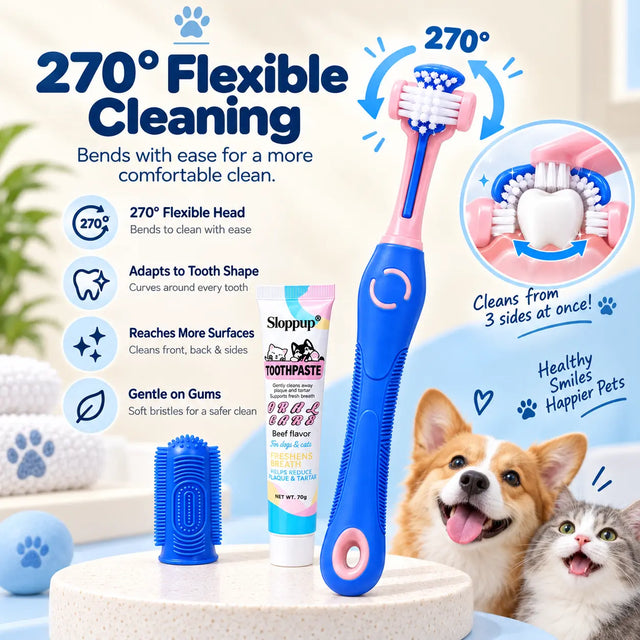
Our Pet Toothpaste & 3-Sided Toothbrush Kit combines beef-flavor pet toothpaste with a brush designed to contact multiple tooth surfaces. Pick it only if the size and shape suit your pet; a smaller conventional brush may be easier for some mouths.
If a full brushing session is not manageable yet
Start with handling practice. A wipe is worth considering only if your pet comfortably accepts gentle contact—it is not a reason to push your finger into a resisting mouth.

Our 60-count Dental Finger Wipes are designed for brief, supervised surface wiping. Do not assume they provide the same cleaning coverage as brushing or that they remove hardened tartar. A finger sleeve does not protect against bites.
For pets who turn away before you even begin, read My Dog or Cat Won’t Let Me Brush Their Teeth. What Can I Do?
What about dental treats and water additives?
Look for evidence for the exact product, not just the word “dental” on the pack. Check the dog or cat list in the VOHC directory, then read the accepted claim and feeding directions. Treat calories and food sensitivities still count. If an additive changes your pet’s willingness to drink, stop and ask your veterinarian about another option.
Ordinary chew toys, crunchy kibble, and products marketed for fresh breath should not automatically be treated as proven dental treatments.
When the problem is access, not cooperation
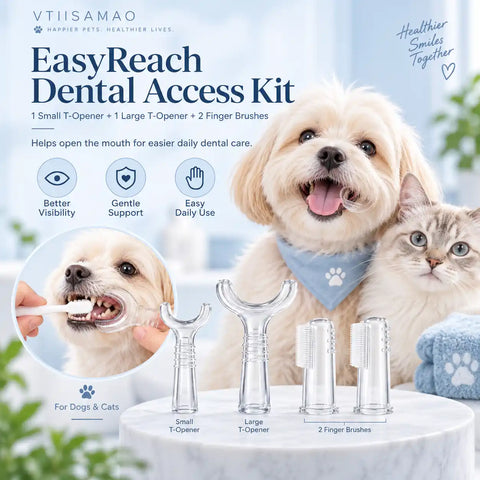
If your pet already accepts mouth handling but you struggle to see the teeth, an accessory may help. The blue Mouth Opener & Chew Assistant is for dogs. The Clear Dental Access Set is labelled for dogs and cats and includes two opener sizes and two finger brushes.
Follow the instructions, use a suitable fit, and stop if your pet resists. These accessories help with access; they do not replace a brush or make restraint appropriate.

Where do at-home scalers fit?
They are a separate tool, not a substitute for daily plaque prevention or a veterinary examination. Removing something visible does not tell you whether teeth and tissues below the gumline are healthy. Ask your veterinarian whether a home device is appropriate for your pet and follow its instructions.
For heavy buildup, pain, bleeding, swelling, or difficulty eating, seek veterinary care instead of attempting a deeper clean at home. The AVMA explains why professional dental assessment and treatment cannot be replaced by an anesthesia-free surface cleaning.
A routine you can actually keep
- Check comfort first. Address pain or unusual resistance before choosing tools.
- Choose the main routine. Build toward regular brushing when appropriate.
- Add selectively. Use a suitable wipe, treat, or additive for a defined purpose, not because more products must be better.
- Review with your vet. Keep dental assessments part of ongoing care.
The best routine is one that matches your pet’s needs, has a clear purpose, and remains comfortable enough to repeat.
Written by Vtiisamao. Inspired by questions in this pet-owner discussion; individual comments are not clinical evidence. Veterinary references do not imply product endorsement or VOHC acceptance of our products. General education, not an individual diagnosis.