Why daily brushing matters
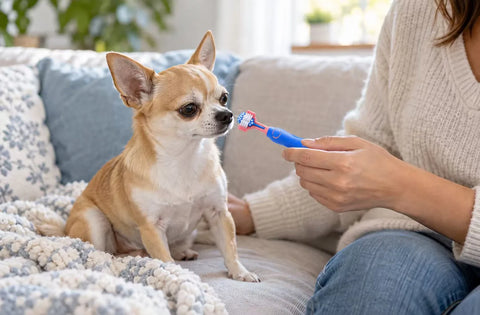
The Veterinary Oral Health Council recommends daily brushing for dogs and cats. Technique and consistency matter, and some pets need a gradual approach. Home brushing is part of ongoing care rather than a promise that dental problems will never occur.
Build a comfortable brushing habit
- Choose a repeatable moment: keep tools in one place and pick a calm part of the day.
- Begin with handling: practice briefly touching the lip and reward calm behavior.
- Add the brush: use light movements for a short session, then build up gradually.
- Stay flexible: pause if your pet becomes uncomfortable. Ask your vet for help rather than forcing a longer session.
It can help to keep a simple care checklist: date, areas brushed and anything unusual you noticed. This gives you a clearer record to discuss at a veterinary visit.
Remember the back teeth
Cheek-side tooth surfaces deserve attention during brushing. Lift the lip gently so you can see where you are working. For difficult viewing angles, a suitable clear access tool can help move lips and cheeks aside; it does not make an unwilling pet ready for brushing.
A brush for routine care, wipes for an additional option
Our toothbrush and beef-flavor pet toothpaste kit is for dogs and cats. Choose tools by fit and follow their directions. Dental finger wipes provide a wipe-on option for accessible surfaces but should not be presented as the same as a complete brushing routine.
Common questions
What if my pet will only accept a little brushing?
Begin with the amount your pet tolerates and seek guidance on gradually improving the routine. Do not trade comfort for a longer session.
Does fresh breath mean the teeth are healthy?
No. Breath alone cannot assess the mouth. Keep regular veterinary dental checks and report changes you notice.
Sources and editorial note
Veterinary Oral Health Council: Brushing dogs' and cats' teeth. This is general pet-care information, not a diagnosis. Product links are from our store; the cited organization does not endorse our products.