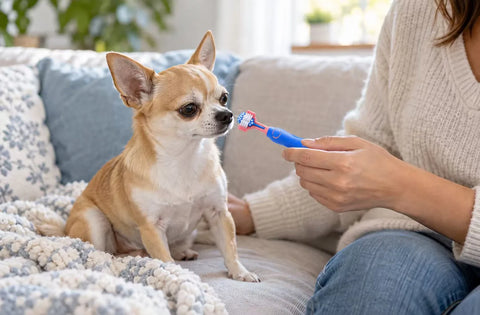
Persistent dog bad breath deserves attention. Dental disease is a common explanation, but breath alone cannot tell you the cause. Start by noting what has changed and arrange a veterinary check when the odor persists, especially if eating or gum changes appear too.
In this guide
What can cause bad breath in dogs?
Plaque and dental disease. Bacteria in plaque can contribute to odor and inflamed gums. Plaque can harden into tartar, which you may notice as yellow or brown deposits. The amount you can see does not show everything happening below the gumline.
Other problems in the mouth. A damaged tooth or another oral problem may need treatment. Looking at a photo or smelling your dog's breath cannot distinguish these reliably. Avoid trying to diagnose a problem by color, odor, or a home inspection alone.
Something your dog has eaten. Food can change breath temporarily. A smell that keeps returning, becomes stronger, or occurs alongside other changes should not simply be blamed on dinner. Your vet can assess whether the cause is dental or needs further investigation. See AAHA's overview of pet dental care.
When should you contact your vet?
Contact your veterinarian about persistent bad breath, red or bleeding gums, trouble chewing or dropping food, increased drooling, or loose adult teeth. Record when the change started and whether your dog is eating differently. These observations help explain the problem; they do not replace an examination.

If your dog appears sore or resists handling unexpectedly, pause the cleaning attempt. For more detail, read our guide to dental warning signs in dogs. The AVMA's pet dental care guidance also explains changes to discuss with your vet.
Build a manageable daily dental routine
Once your veterinarian confirms that home care is appropriate, aim for daily brushing with a suitable dog toothbrush and toothpaste made for pets. Do not use human toothpaste. Choose a calm moment and begin with a brief step your dog accepts rather than trying to clean every tooth immediately.
- Prepare before you start. Keep the brush, pet toothpaste, and a reward within reach. Let your dog investigate the tools.
- Work gradually. Introduce gentle lip handling and short brushing sessions. Stop if your dog shows discomfort; never force the mouth open.
- Make the routine repeatable. A familiar time and place can make practice easier to maintain. Track which steps your dog accepts so you can discuss difficulties with your vet.
Our dog toothbrush and pet dental finger wipes are options to explore for daily surface care. Ask your vet which tool suits your dog's mouth and tolerance. Wipes are not a substitute for treating dental disease. If handling is the challenge, start with our gradual toothbrushing introduction guide.
What home care cannot do
Brushing helps remove plaque; it does not remove hardened tartar. Even consistent brushing cannot replace necessary veterinary dental examinations, X-rays, or treatment. Brushing inflamed gums can hurt and create further resistance. AAHA's home oral hygiene guidance explains these limits.
Do not scrape deposits off at home or use a breath-freshening product to postpone an examination. Ask your vet how often your dog needs oral checks and professional cleaning; the schedule should reflect the individual dog.
Common questions about dog bad breath
Can I fix bad breath just by changing food?
Do not assume a diet change will resolve persistent odor. Discuss the cause first. Ordinary kibble, soft food, and vegetables should not be treated as replacements for an appropriate dental care plan.
Should I brush if my dog's gums bleed?
Pause and contact your veterinarian. Do not scrub harder or keep brushing a painful area.
How often should I brush my dog's teeth?
Daily is the goal when the mouth is comfortable and your vet agrees. Start gradually if your dog is learning; seek advice if pain or sudden resistance prevents brushing.
Written by the Vtiisamao Editorial Team. This educational article is not an individual diagnosis. Images are AI-assisted illustrations, not customer results. Sources: AAHA and AVMA guidance linked above.