Many dog parents still hear the same advice: “A bone cleans their teeth,” “No bad breath means no problem,” or “An occasional brush is enough.” A better approach is to understand what home care can do and make it a regular, comfortable habit.
Myth 1: “Chewing bones is the same as brushing”
Chewing and brushing are different activities. Do not assume that a bone cleans every tooth surface or replaces a brushing routine. Bones can also pose a hazard: sharp pieces can injure the mouth or digestive tract, and pieces can become lodged. Keep cooked table bones out of your dog's reach. The FDA explains the risks of bones and other holiday hazards.
A better approach: make a suitable pet toothbrush and pet toothpaste the starting point for home care. Ask your veterinarian about appropriate dental chews or other additional options.

Myth 2: “A quick brush once in a while is enough”
Brushing is most useful as a regular habit. The Veterinary Oral Health Council recommends daily brushing and recognizes that some dogs will not tolerate a complete routine straight away. Regular brushing activity is better than none; a short session is not automatically “wasted.”
A better approach: aim for daily care, but start with what your dog comfortably accepts. Do not force a one- or two-minute session just to meet a timer. Work on consistency and gentle technique, and ask your vet for help if handling is difficult.

Build a calmer toothbrushing routine
- Pick a quiet moment. Prepare the brush and toothpaste before bringing your dog over.
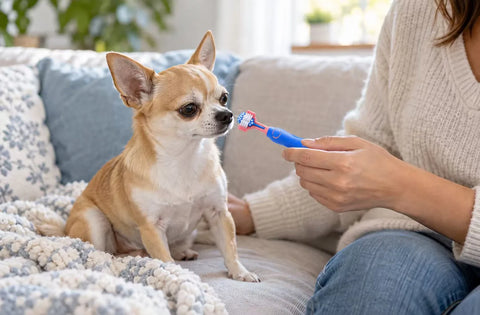
- Introduce handling first. Let your dog investigate the brush, then briefly practice lifting the lip. Reward cooperation.
- Use toothpaste made for pets. Follow the label and choose a brush that fits the mouth.
- Brush gently. Begin with accessible outside surfaces. Gradually include the teeth farther back as your dog becomes comfortable.
- Finish positively. Stop if your dog shows distress or discomfort. Clean and store reusable tools as directed.
Choose tools for the job
For regular brushing: Pet Toothbrush & Toothpaste Kit
Our kit combines a three-sided brush with beef-flavor pet toothpaste and is suitable for dogs and cats. Choose it as a practical starting point for a brushing routine, using the product directions and a size your pet comfortably accepts.
For an additional wipe-on option: Dental Finger Wipes
If your pet tolerates a finger wipe more readily, the 60-count wipes offer a way to care for accessible tooth surfaces. They are an additional option, not a promise of the same cleaning as thorough brushing. Introduce them gradually and stop if your pet resists.
No bad breath does not mean “no dental problem”
Breath alone cannot tell you whether the mouth is healthy. Watch for persistent odor, red or bleeding gums, visible tartar, loose teeth, pain or changes in eating. A veterinarian can assess issues that you cannot see at home. Daily care does not replace professional dental evaluation or treatment. AAHA explains why routine dental checks matter.

Common questions
How often should I brush my dog's teeth?
Aim for daily brushing. If your dog is not ready, build up gradually with short, regular sessions and ask your veterinarian for a practical plan.
Does brushing remove hardened tartar?
Do not rely on brushing to remove established tartar. Its role is managing new plaque; hardened deposits should be assessed by your veterinarian.
Should I keep brushing if the gums bleed?
Stop and contact your veterinarian for advice, especially if there is pain, swelling or persistent bleeding. Avoid brushing harder to try to fix it.
Keep learning
Read why daily brushing matters or follow our at-home dental-care guide.
Sources and editorial note
- FDA: Keeping dogs and cats safe from holiday hazards
- VOHC: Brushing dogs' and cats' teeth
- AAHA: Pet dental-care facts
- AVMA: Pet dental care
It provides general information, not an individual diagnosis. Store product links are included; the organizations cited do not endorse our products.