For fresher breath before Halloween gatherings, start a gentle daily brushing routine with pet toothpaste, and arrange a veterinary check if bad breath persists. Dental wipes can be an extra cleaning option, but they do not replace brushing or treat dental disease.
Bad breath is more than a party problem
A costume and a photo can wait if your pet seems uncomfortable. Persistent bad breath can be a sign of dental disease or another health problem. It is a reason to contact your veterinarian, rather than cover the smell with a mint or add more products.
Book a veterinary check for ongoing bad breath, red or bleeding gums, loose teeth, drooling, or a change in eating habits. If the mouth appears painful, stop home cleaning and ask your veterinarian what to do next. AAHA’s dental care guidance explains the role of professional assessment and home care.
Start a gentle routine before the busy evening
- Choose a quiet moment. Practise when your dog or cat is relaxed, away from visitors and the doorbell. Introduce handling gradually; stop if your pet becomes distressed.
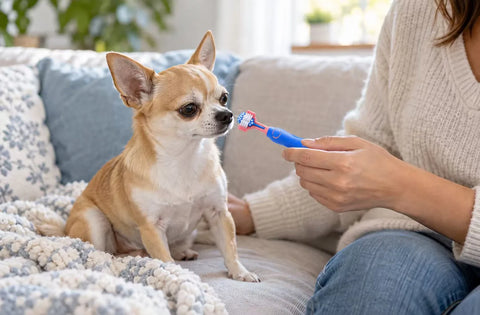
- Brush regularly with pet toothpaste. Use a brush that fits comfortably and toothpaste labelled for your pet’s species. Aim for daily brushing, with your veterinarian’s advice on technique. Start with short, comfortable sessions instead of forcing a full session.
- Use wipes as an additional option. If your pet tolerates a finger wipe, follow the product instructions for gentle contact with accessible tooth surfaces. Wipes are an extra home-care choice, not a proven equivalent to brushing or a way to remove established tartar.
- Keep your vet visits part of the routine. At-home care supports maintenance between examinations; it cannot diagnose or treat disease below the gumline.
The Veterinary Oral Health Council recommends daily brushing for dogs and cats when practical, while recognising that pets differ in what they tolerate. This general guidance is not an endorsement or certification of our products.
Choose the tools that fit your pet
You do not need every accessory to begin. Start with a manageable routine, then add a tool only if it solves a specific handling problem.
For brushing: Toothbrush & Toothpaste Kit
A 3-sided brush with beef-flavor toothpaste, for dogs and cats. Check fit and your pet’s tolerance before use.
See the toothbrush kitFor wipe-on care: Dental Finger Wipes
A 60-count option for dogs and cats. Useful for owners who want a simple additional cleaning step on accessible surfaces.
See the finger wipesFor dogs: Blue Mouth Opener · 2-Pack
An optional aid designed to help keep the mouth open during care. Use only as directed and under supervision; never force the mouth open.
Manufacturer-recommended replacement: every 2–3 months per piece, or sooner if worn or damaged.
See the blue mouth openerFor dogs & cats: Clear Access Set · 4 Pieces
Designed to move lips and cheeks aside for a clearer view of back teeth. Includes 2 access tools and 2 finger toothbrushes. It serves a different purpose from the blue opening aid; use each only as needed.
See the clear access setWhere does a dental scaler fit?
Our pet dental scaler is a separate tool, not a required first step for daily brushing or wipes. Before using a scaler on your pet, discuss suitability and safe use with your veterinarian. Removing visible buildup does not replace a veterinary dental examination or professional treatment. Do not attempt to treat painful gums, loose teeth, or disease below the gumline at home.
A calm, pet-safe Halloween checklist

- Keep chocolate, candy, gum, and wrappers out of reach. Xylitol, found in some sugar-free products, is particularly dangerous for dogs. Do not use human breath mints or toothpaste on pets.
- If your pet may have swallowed a harmful food or product, contact a veterinarian or animal poison service promptly.
- Keep the usual care routine rather than trying an unfamiliar tool just before guests arrive.
- Give your pet a quiet place away from the party and keep drinking water available.
For more holiday guidance, read AAHA’s guide to pet-safe Halloween treats.
Common questions
Can I fix my pet’s bad breath in one evening?
There is no reliable one-evening fix for an underlying dental problem. Begin regular care, and ask your veterinarian about persistent or sudden bad breath.
Can finger wipes replace brushing?
Do not assume they provide the same benefit. They can be an additional cleaning option, but brushing remains the standard home-care approach when tolerated.
Do cats and dogs use the same accessories?
Our toothbrush kit, finger wipes, and clear access set are intended for dogs and cats. The blue mouth opener is for dogs only. Suitability also depends on size, mouth condition, and tolerance.
Do I need both opening aids?
No. For dogs, the blue aid supports opening and the clear set helps with visibility and access. Choose according to need. Cats should not use the blue dog-only aid.
Keep the routine going after Halloween
Use the holiday as a reminder to build a habit, rather than a deadline for a perfect smile. Start with one practical daily-care option and add only what your pet needs.
Explore the toothbrush & toothpaste kit Prefer wipe-on care? Explore wipes
More from our Pet Dental Care Journal
Sources & editorial note
Prepared by the Vtiisamao team using the veterinary resources linked above. This is general educational information, not a diagnosis or individual veterinary advice. Product descriptions explain intended use; they do not imply veterinary endorsement, VOHC acceptance, or treatment of periodontal disease.